
In Chainsaw Man, the depiction of praying astronauts is employed to instill a sense of dread associated with the vastness and obscurity of space, mirroring historical disasters such as the Apollo 1 tragedy. The portrayal of severed astronauts symbolizes mankind's helplessness in the face of the uncharted and ominous cosmos, reinforcing the manga's central motif of fear. The imagery of fallen astronauts acts as a cautionary tale regarding the terrors inherent in space exploration, underscoring the series' broader examination of fear as a theme.
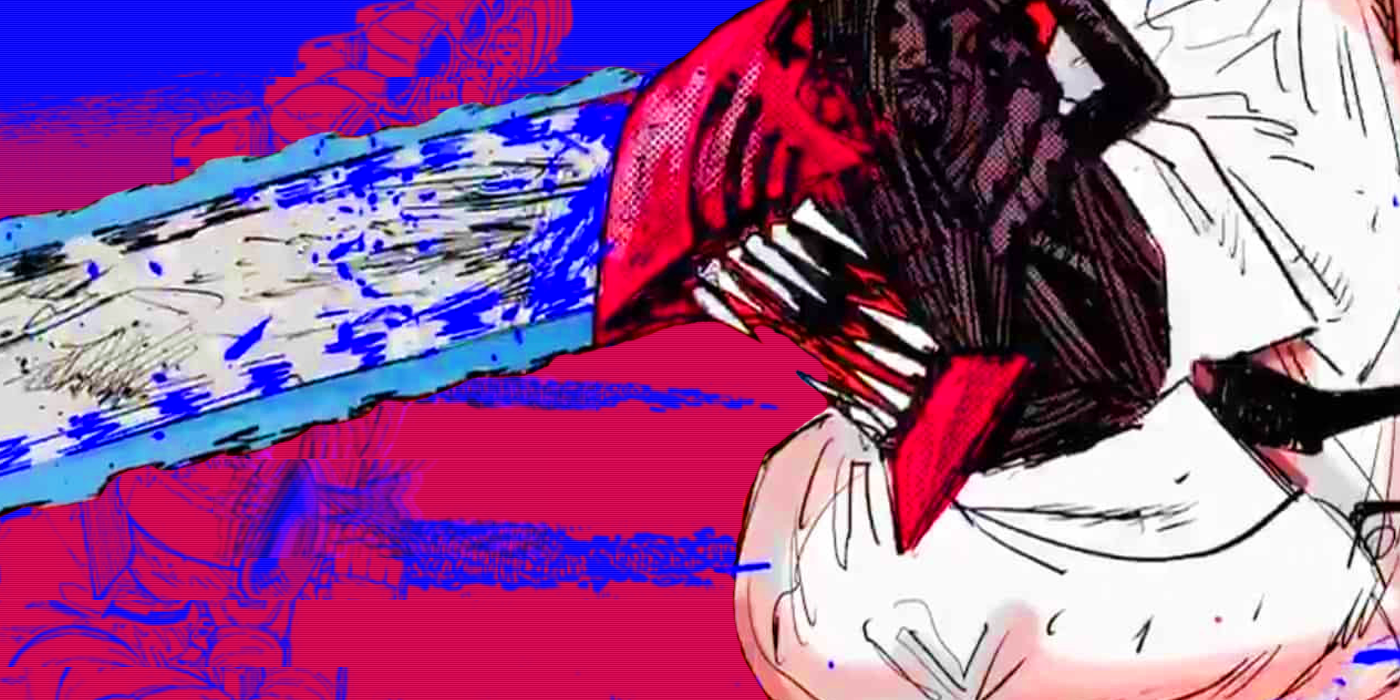
The debut panel of the Darkness Devil in Chainsaw Man might be connected to a photo of the Apollo 1 astronauts praying over a miniature space shuttle.
Tatsuki Fujimoto's Chainsaw Man is renowned for its intense action and brutal gore, but beneath its striking visuals lies a rich tapestry of themes. The series delves into love, change, and, most prominently, fear. This is especially evident in one of the most striking panels, where Fujimoto's commentary on fear is unmistakable.
In Chapter 64, the international assassin "Santa Claus" uses her former apprentice to make a pact with the Darkness Devil, one of the series' mysterious Primal Devils. After the entire cast is transported to Hell, the Darkness Devil fully manifests. Its arrival is heralded by a chilling image: a hall of bisected astronauts with their hands joined in prayer. While initially seeming random, this image likely references a dark moment in human history.
Chainsaw Man's Most Iconic Panel is Based on Apollo 1
This panel possibly alludes to a photo of the Apollo 1 crew—Ed White, Gus Grissom, and Roger B. Chaffee—praying over a miniature of the Apollo 1. On January 27, 1967, these astronauts tragically perished when their shuttle caught fire during a test launch. This isn't the first time Chainsaw Man has drawn from real-world tragedies for its controversial villains, and it's unlikely Fujimoto's use of the praying astronauts is coincidental.
In the world of Chainsaw Man, devils derive their power from humanity's fear of the realities they represent. The image of fallen astronauts is intended to evoke the fear of space and darkness. The catastrophe of a failed space shuttle test conjures fears of entrapment, isolation, and the fatal risks of exploring a void that threatens to consume all.
Chainsaw Man also draws heavily from Western influences, with a surprising South Park character inspiring one of its heroes.
Space, often seen as the final frontier, also embodies the ultimate darkness surrounding humanity. The appearance of fallen astronauts before the Darkness Devil's arrival serves as a grim warning, akin to the foreboding heralds of other Primal Devils in Chainsaw Man Part 2. Fujimoto uses the image of praying astronauts to underscore the terrifying potential of space and the darkness it conceals.
Chainsaw Man's Bisected Astronauts Represent Fear of the Unknown
Metaphorically, the astronauts in Chainsaw Man are explorers who ventured into darkness, only to encounter the worst. Space symbolizes the unknown, and the Darkness Devil's entourage highlights humanity's lack of control over the vast night. Whether or not it directly references the Apollo 1 photo, this imagery reinforces the manga's themes of fear.
Chainsaw Man’s most famous panel ties into the series' exploration of fear. While many devils in the manga represent physical threats, the most powerful ones are more abstract, like the Four Horsemen Devils of Famine, Control, Death, and War, and the Primal Devils. The fear of darkness is a fundamental human experience, and the Darkness Devil epitomizes this fear, making it fitting to represent it with a real-life tragedy that brought those fears to life.
All chapters of Chainsaw Man are available on Manga Plus! Read on Manga Plus.