
Kyle Rayner's Green Lantern constructs are typically inventive and enjoyable, yet he notably diverged from this trend in a significant confrontation with Major Force. This moment, infamous for its impact, marked a pivotal shift in Kyle's superhero journey after his girlfriend Alex fell victim to a shocking act of violence, a tragic event often cited in comic book lore. In issue #55 of Green Lantern, Kyle's intense animosity towards Major Force manifested through a startlingly brutal construct: an electric chair designed to electrocute his adversary.
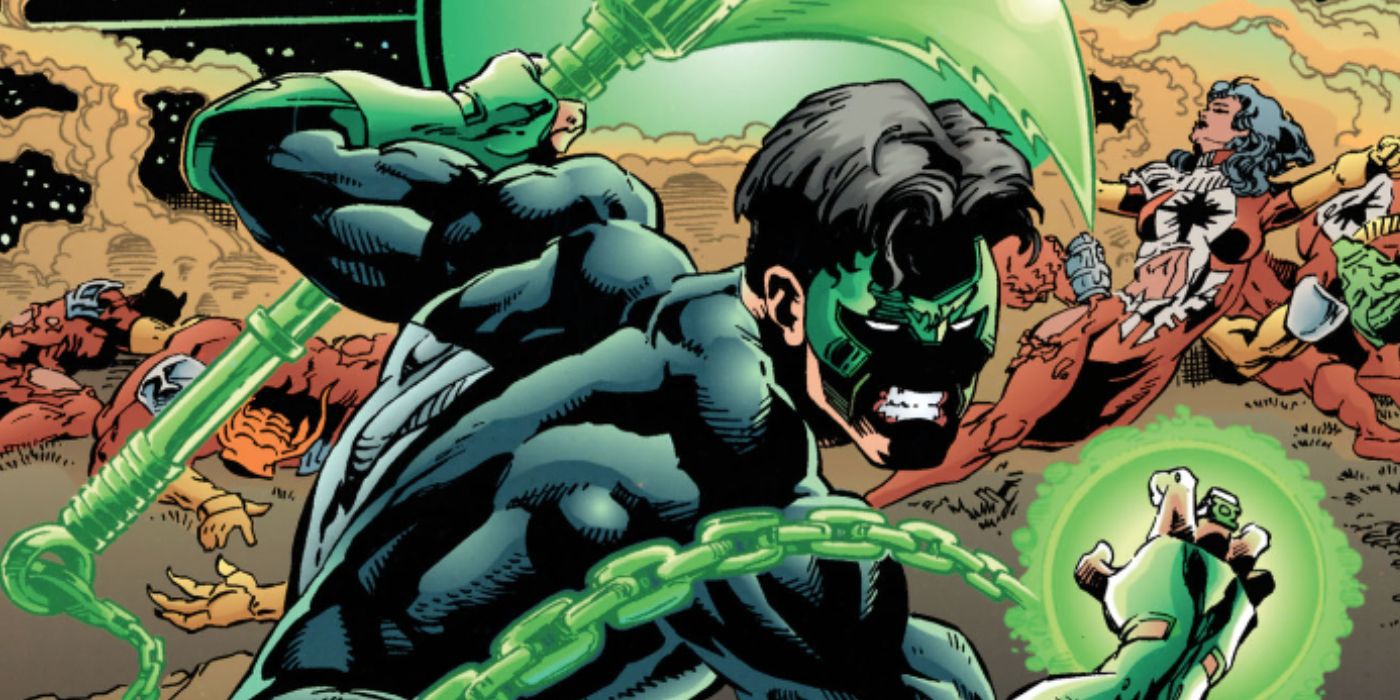
In his darkest hour, Kyle Rayner, as Green Lantern, manifested his most intense construct to exact vengeance upon his archenemy.
Warning: Contains depictions of death that may be disturbing to some readers.
Kyle Rayner stands out among the Green Lantern Corps for his unparalleled creativity. A former artist turned superhero, Kyle's constructs often reflect his imaginative spirit, drawing inspiration from pop culture icons. Yet, when faced with his ultimate nemesis, Kyle proved capable of crafting one of the Corps' most formidable and chilling constructs.
In "Green Lantern #55," penned by Ron Marz and illustrated by Derec Donovan, Darryl Banks, Craig Hamilton, and Romeo Tanghal, Kyle Rayner emerges early in his career, meeting the original Green Lantern, Alan Scott. The issue also chronicles Kyle's first encounter with Major Force, a villain who had brutally murdered Kyle's girlfriend, Alex DeWitt.
The clash with Major Force was brutal, particularly given Kyle's novice status as a Green Lantern. Amidst the melee, Kyle wielded his power ring to create an electric chair, using it to electrocute Major Force in an attempt to extract vital information.
The turning point in Kyle Rayner's journey as Green Lantern was marked by a tragic incident in "Green Lantern #54," where he returned home to discover Alex's horrific murder, a grim event that would later become emblematic of the "Women in Refrigerators" trope. This term, coined by comics enthusiast Gail Simone, refers to the use of female characters' suffering to catalyze male protagonists' narratives.
For Kyle, Alex had been more than a girlfriend; she had served as a guiding light, urging him to harness his abilities for greater purposes. Her death, senselessly brutalized, ignited a fierce determination within Kyle to seek justice.
In the aftermath of Alex's murder, "Green Lantern #55" portrays Kyle consumed by a profound rage directed squarely at Major Force. Constructing the electric chair was not merely an act of retaliation but a manifestation of his unbridled fury and thirst for retribution. Had it not been for the intervention of the Los Angeles Special Crimes Unit, Kyle's wrath might have driven him to take Major Force's life.
This stark contrast between Kyle's typically lighthearted constructs and the electric chair underscores the depths of his anguish and the severity of his loss. Despite the Green Lantern oath's prohibition against lethal force, Kyle's overwhelming grief momentarily eclipsed his adherence to those principles.
In this pivotal moment, Kyle Rayner's character confronts its darkest hour, reflecting a broader critique of the comics industry's treatment of female characters. His journey, intertwined with themes of justice and redemption, resonates as a testament to the enduring impact of loss and the complexities of heroism.